On this page
Any business can run aground on the same mistakes that plague fledgling brands. Launching a new product without checking market fit. Veering off course from data-driven decisions because, well, ignorance is bliss. But there's a lot less advice out there for mature ecommerce businesses. The ones that have "made it" and are now facing stagnation, exhaustion, or some new sisyphean hurdle.
This article is for the small but established ecommerce business. The tea curator with a thriving local customer base and a built-out online store that's healthy but flatlined. The graphic tee artist with a loyal social media following who moved from a marketplace to their own ecommerce platform but is struggling to balance cash flow and inventory.
Here are six of the most common mistakes these businesses make, and what to do instead.
Mistake #1. Sitting on Inventory
Over time businesses accumulate stale stock. Maybe a product stopped selling or a variant was added to satisfy one wholesale account, but then they left.
As a result, your cash gets tied up in inventory while the bestsellers continue to sell out. And nobody wants to be the one to kill a product.
The businesses that stay healthy at this stage regularly sort through their product catalog. Some tips:
- Forecast based on actual demand data
- Deploy strategies that move dead stock out
- Set a threshold for review when a product hasn't moved a set number of units in a specific window
Inventory hygiene is unglamorous, but it's a big lever on cash flow at this stage. And cash flow is what gives you room to place bigger bets on the products that are actually working.
Mistake #2. Ignoring Opportunities for Retention
Acquiring a customer is only the first step toward making that investment pay off. One analysis of 99 billion digital sessions found that returning visitors converted at 2.9%, compared with 1.7% for new visitors.
An oft-cited, though aging, Harvard Business Review estimate suggests that acquiring a new customer can cost five to 25 times more than retaining an existing one.
Customer retention looks different depending on the business and product. A reward program that offers a free item or discount on your birthday may be effective for a packaged cookie business. A product refill reminder might boost reorders for a CPG (consumer packaged goods) business, like a skincare brand or a coffee roaster.
Consider your options and test to see what works best for your business:
- Post-purchase communication beyond thank-yous: For example, instructions for how to use the product, UGC from people using and loving it, an SMS from a real customer service rep checking in...whatever makes the most sense for your brand
- Reorder timing and refill reminder emails, timed to how your product is typically used
- Subscription options for products customers reorder anyway (one of the highest-leverage retention plays for CPG and consumable brands because it turns a repeat purchase decision into a one-time one)
- Early access to product drops or restocks for repeat buyer: for instance, you can activate a discount code that's sent through your email provider to a segmented audience
- Customer service staffing or training to increase customer satisfaction
- VIP programs that reward buyers without adding friction at the moment of purchase
Businesses that keep growing profitably treat retention as a company-wide outcome, not just a marketing tactic.
Don't forget timing and location
Timing can make or break your retention strategy.
For instance, clothing and accessory brands tend to see a higher spike in repeat purchase in the first week after their first purchase. That's because their excitement about new clothes and willingness to put up the money is highest right around the time of purchase.
CPG brands on the other hand see a higher return rate 2-5 weeks after the first purchase. Customers need time to try out the product (or run out of it) before they consider buying again.
Look at the timing of your product and customer base. What's the typical rhythm and how can you accommodate?
Similarly, consider location. If you're running a loyalty program but only surface it to online customers, you could be missing out on all the customers that walk through your brick and mortar every day and would love to join.
If your customers hate pop-ups and rage click away, don't bait them with a loyalty offer right away. Send a thank-you after their first order with the number of points they could earn if they sign up.
Mistake #3. Using Discounts as a Growth Strategy
Somewhere between the first Black Friday and now, discounting became the default strategy for driving ecommerce sales.
Every year, sitewide promos creep up earlier and more often. Naturally, customers have learned to wait. But constant discounting may also be losing its power: AlixPartners' 2025 research found that the importance shoppers place on low prices fell 13% year over year, while 30% fewer consumers rated finding the best deal as "very important."
The solution is to give customers other reasons to buy. For example, product bundles still give customers a feeling of better value for their investment, without you having to cut into your margins to compete.
Other strategies to swap for discounts:
- Early access on new drops for your best customers; or honestly, just more hype around a product drop for everyone
- Limited runs, seasonal collaborations, or members-only releases that create a sense of urgency
- Waitlists that drum up anticipation and FOMO
The businesses that get out of the discount cycle are the ones that build excitement and instill a culture of loyalty and value, both for their own product and for their customers.
Mistake #4. Over-Relying on Paid Acquisition
Paid ads got a lot of businesses to where they are. That doesn't mean they'll get them to the next stage.
What starts as an efficient acquisition channel shouldn't be Plan A, B, and C. If a platform changes its algorithm, your ad account gets flagged, or costs climb another 20%, you may be out of luck.
Here are some ways to balance your ad strategy with owned or organic engines:
- Build an email and SMS list over time
- Use SEO strategies to bring in intent-driven traffic at no cost per click
- Invest in content and community that give customers a reason to choose you beyond an introductory offer. Recent transaction-level research found that promotion-driven adopters spent less and were less profitable after adoption than organic adopters.
- Create a referral program to find new customers from your existing ones
Mistake #5. Letting AI Replace What Your Customers Came For
We're seeing this over and over again. The explosion of AI in brand-building has brought customer fatigue with it. People are more likely to click away as soon as they sniff an AI generated product image or have to deal with an AI customer service bot.
This reaction is an opportunity you should absolutely seize. A brand that feels human can have a leg up, or at the very least, a better chance of holding on to the customers that already identify with you.
What not to do:
- Use rendered product photos
- Stuff your website with new pages that don't offer any value or have any voice
- Send automated emails without any filters or strategy (automated emails are great, but not when the wrong person receives the wrong message)
- Outsource customer service entirely to a bot
Your opportunity:
If your business has been around a while, it probably already has a voice and a personality. You're known for certain traits, whether it's the quality of your product, your ethos behind your supply chain, or literally who you the founder are.
Protect that and use it. Your point of view, your real products photographed out in the real world, your friendly newsletters. It's not just that people are reacting negatively to AI use. It's that a strong sense of identity and human connection has always been an effective business strategy.
Mistake #6. Letting Your Tech Stack Calcify and Get in the Way
The tech that got you where you are now may be the ceiling you're hitting as you try to evolve and grow.
A legacy platform is an older system that either hasn't kept pace with your needs or doesn't play well with the tools you rely on now. A lot of businesses sink time and money into software they're too afraid to let go of.
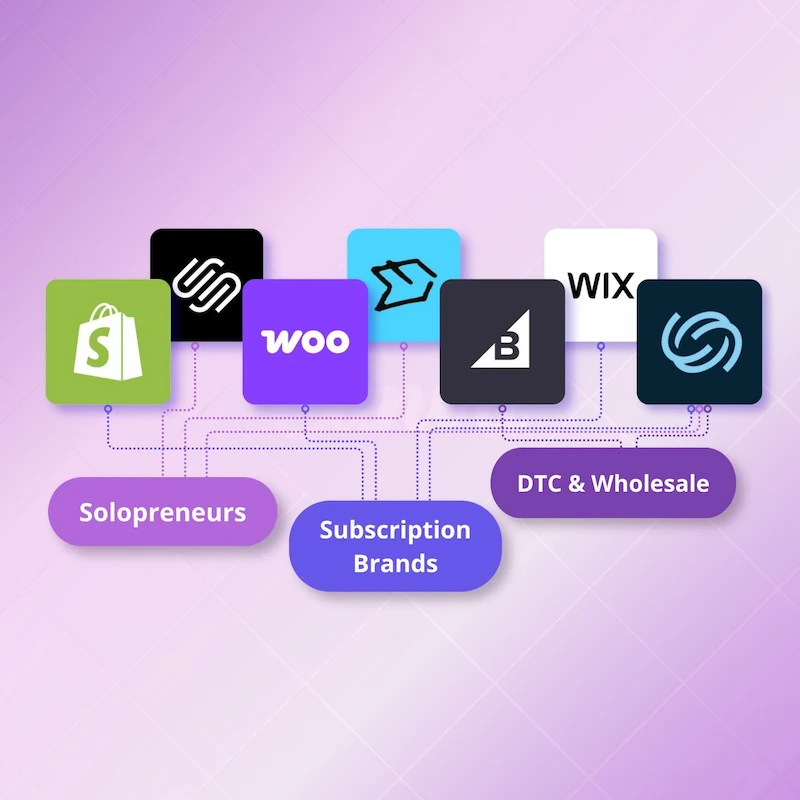
Before you go down that road, ask yourself if it's actually going to save you in the long run. When it comes to ecommerce platforms, a lot of small businesses are left choosing between clunky and cheap, or expensive and flexible.
Merchant Tech is built for exactly this stage. Features are built in, customer service is entirely human, and we're always making improvements based on what our merchants ask for.
That means less time and money spent on apps to fill gaps in your platform without giving up the safety and security of a fully hosted and monitored provider.
Beyond the core ecommerce capabilities you'd expect (hosting, payment processing, order fulfillment), Merchant Tech gives you the tools to grow past the launch phase. Customer reviews on your product pages. Storefront optimization for better conversions. Klaviyo and Mailchimp integrations for email and SMS. Discount code controls and product subscriptions, all managed from one dashboard.
Everything a small business needs to make customers happier and your life easier.
Common Ecommerce Mistakes FAQ
What counts as an established ecommerce business?
An established ecommerce business is generally one that's been selling online for two or more years, has a repeat customer base, and is past the launch phase. Their growth challenges now look more like retention scaling than finding product-market fit.
How do you retain ecommerce customers?
Retention comes from the full experience, from product quality and delivery to customer service. Tactically, that can mean post-purchase communication, reorder reminders or automations, or early access and VIP rewards for repeat buyers.
What are alternative sales strategies to use instead of discounts?
Product bundles, early access to new drops, limited runs, seasonal collaborations, members-only releases, and waitlists all create reasons to buy without eroding margin. The goal is to build excitement so customers are hyped on the product itself, not just the price.
How do I balance paid ads with other growth strategies?
Treat paid acquisition as one channel. Put other resources into owned and organic engines alongside it like email and SMS lists, SEO, content, community, and referral programs.
Should ecommerce businesses use AI?
AI may be useful in the back office for tasks like forecasting, tagging inventory, and drafting internal reports. Keep humans on the customer-facing surfaces like product photography, brand voice, customer service, and anything else your customers came to you for specifically.
How do I know when it's time to upgrade my ecommerce platform?
When the platform starts capping what your team can accomplish, or you're spending a lot of time on custom workarounds, or you're spending hundreds on apps that compensate for features your platform doesn't handle, it may be time to look at alternatives. Merchant Tech is built for established businesses that have outgrown their current setup but don't want the cost or complexity of enterprise platforms.

Kate Maruyama: Kate is a Senior Editor at Merchant Tech where she oversees content that helps merchants understand platform tools, optimize their online stores, and grow their businesses.